Editor’s note: For decades, the Inner City Ministry of Cru® has served vulnerable communities by equipping pastors and lay leaders with resources and training to reach their neighborhoods with the gospel of Jesus Christ. In this special two-part series, we highlight a sampling of innovative ways our inner city missionaries have come alongside our ministry partners to meet changing needs. Today, we focus on outreaches in Tallahassee, Chicago and Los Angeles.
Not long after accepting Christ as his Savior in 1944 — and several years before launching Campus Crusade for Christ® — Dr. Bill Bright spent five years ministering to the homeless, prisoners and inhabitants of Los Angeles’ Skid Row.
“Again and again my heart was broken as I witnessed the desperate needs of the neglected,” the late Bright wrote in an undated online column, In Their Steps.
Skid Row was located 20 miles south of First Presbyterian Church of Hollywood, where Bright gave his life to Jesus during a college-age Bible study. Although he spent several years doing street ministry among the “least of these,” ultimately, Dr. Bright and his wife, Vonette, established Campus Crusade for Christ at the University of California, Los Angeles. Over the years, Campus Crusade continued to develop new ministries and initiatives, becoming the world’s largest evangelism ministry, with a presence in 191 countries. In 2011, the ministry rebranded as Cru®, partly to better reflect its wider evangelism efforts.
In 1983, Bright set in motion a new Cru initiative tied to his passion for ministering to the poor.
“To be sure, many churches and organizations today devote considerable effort helping the poor and disadvantaged and providing emergency relief, but on the whole, Christians are having very little impact on society,” he wrote in his online article.
Instead of immediately launching a preconceived ministry to decaying and neglected urban cores, Bright initiated a hearing survey, commissioning teams to engage inner-city pastors. After hearing from 400 urban church leaders, a clear need emerged: the pastors had already developed ministries for their inner-city neighbors, but they needed partners to support their work, especially with effective resources.
The work began as Here’s Life Inner City®, before becoming Cru Inner City. This year it rebranded as the Inner City Ministry of Cru. One of the first resources it developed was Boxes of Love®, a holiday-oriented outreach providing a full Thanksgiving meal for six, plus gospel literature. Since then, Cru has added other Compassionate Products™, including PowerPack® backpacks, Homeless Care Kits and Easter Bags. Later additions included S.A.Y Yes! Centers for Youth Development® and numerous discipleship courses, including the Creating Options Together™ Bible Study.
All of the programs were designed to equip churches to meet the material needs of their neighbors while offering the hope of the gospel. These outreaches are the core of Cru’s inner-city ministry. Local Cru leaders — following the same listening posture as Dr. Bright more than 40 years ago — have launched special initiatives to meet pressing needs by thinking outside the box.
Pop-up VBS
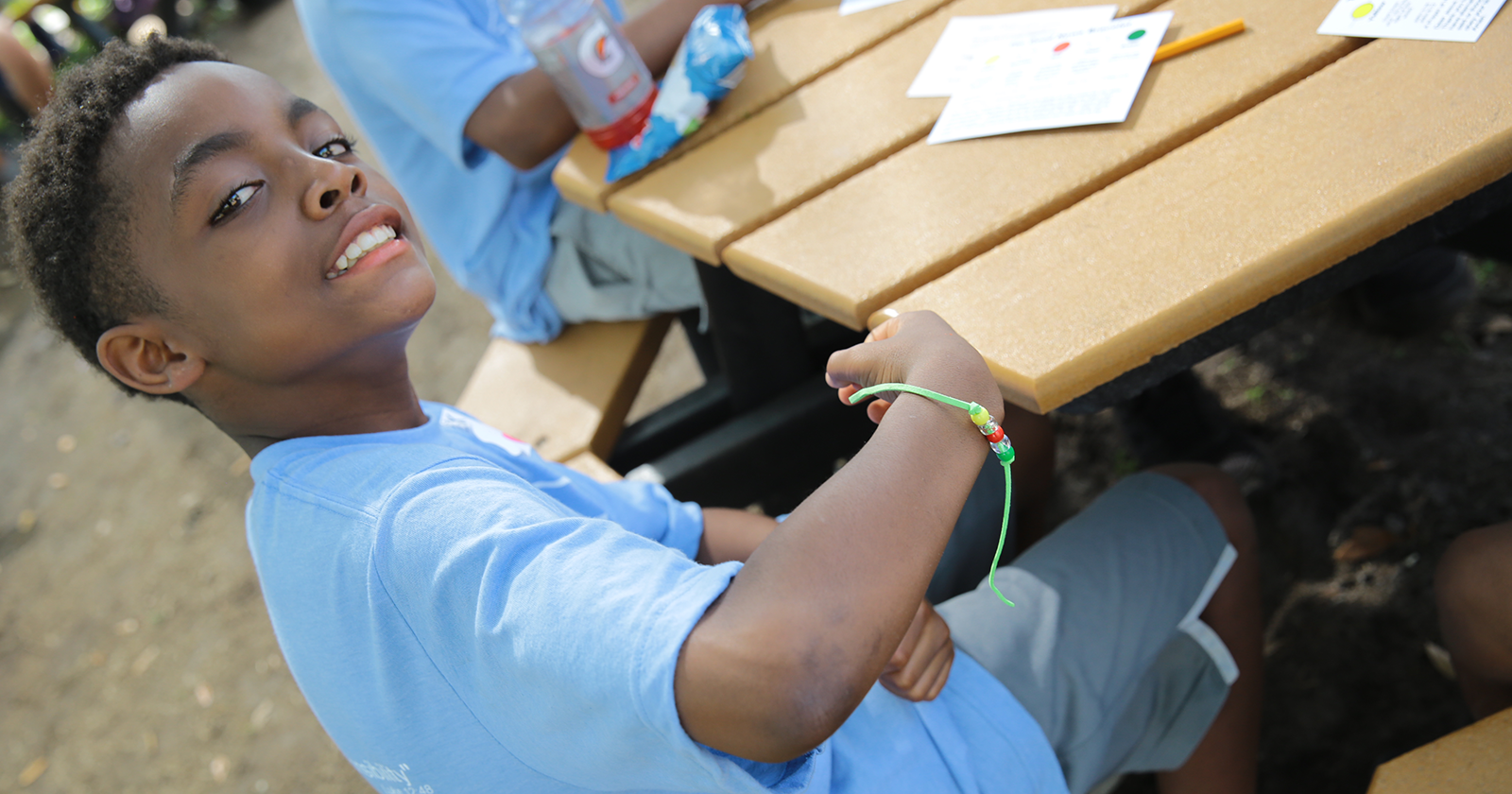
Each June, as students living in the Springfield Apartments adapt to humid, aimless Tallahassee summers, a coalition of local churches descends on the sprawling public housing community to interrupt the monotony with a pop-up Vacation Bible School.
Among those leading the effort is John Bump, team director for the Inner City Ministry of Cru in Tallahassee. The three-day event includes crafts, activities, games, snacks, worship songs, and a Bible lesson with a clear gospel message.
Each summer, 30 to 60 children from the housing complex gather around volunteers and church leaders to learn about Jesus.
The attention is welcome to a 50-year-old community that has often been overlooked. The aging 200-unit complex is operated by the Tallahassee Housing Authority, which has recently commissioned a redevelopment project to transform the site and its surrounding area, more than doubling its capacity to 540 units.
Bump and his team have spent years working with residents, focusing on the hope that can only come through faith in Jesus Christ.
“We are continuing to reach out to their families to help them continue to grow in relationship with God, themselves, and each other,” he said.
The success of the annual VBS is evident by the number of residents who participate in a year-round Community Discovery Bible Study, which is also drawing teens.
“We meet during the school year one Wednesday of the month to study the Bible, share a meal, pray for each other and have fun together,” Bump said. “At the end of the VBS, counting all the children, participants and volunteers, we had 70 children and five churches participating!”
‘At the end of the VBS, counting all the children, participants and volunteers, we had 70 children and five churches participating!’
This year, he met a new resident who, with his wife, moved to the area from a rural community in Georgia to be closer to family and better health care opportunities.
“He was very encouraged that he could not tell the participants from the volunteers, that everyone was sharing in the excitement of learning about Jesus and worshiping God together,” Bump said.
After last year’s VBS, a new family joined the monthly Discovery Bible study, with two of their teen daughters volunteering to lead one of the gatherings. A year later, the family still attends the study.
Hands Across the City
The troubled young man maneuvered his way through the robust crowd, praying at one of the Southside’s major intersections. As soon as he found one of the officers monitoring the event, he surrendered the bag of ammunition in his hands.
“Struggling with instability related to his medication, he feared he might harm himself,” said Marc Henkel, co-team director of the Inner City Ministry of Cru in Chicago.
The crowd, featuring dozens and dozens of residents and pastors, representing more than 20 churches, was marching along a four-mile stretch of South Michigan Avenue, where it dead-ends at Little Calumet River, north to 95th Street, near Abbott Park. More than 100 people with Bibles and banners in their hands — and prayers on their lips — were there to participate in the annual Memorial Day weekend Hands Across Chicago, an initiative designed to curb summer violence.
The young man’s actions affirmed the need for the Saturday peace march through the neighborhoods of Pullman, West Pullman and Roseland. In addition to the march, five other prayer gatherings were scheduled throughout the holiday weekend.
“Leaders prayed with him and later helped remove firearms from his home,” Henkel said. “We are grateful for how God used prayer, community, and timely intervention to bring hope and protection.”
Henkel and his Cru team have been involved with the summer prayer events for about a decade.
“We all need to be involved in activities like caring for the youth, providing jobs, but prayer brings a change to the community. Because when we pray, we invite God into our community,” Henkel told WGN News reporter Jewell Hillery, who acknowledged a drop-off in gun-related violence, with just three deaths in 2025, down from nine in 2024.
‘We all need to be involved in activities like caring for the youth, providing jobs, but prayer brings a change to the community.’
The Memorial Day effort also kicked off weekly summer-long prayer events at numerous intersections noted for higher rates of violence. Henkel said that the coalition of churches’ Friday night Prayer Campaign has also made a significant impact in the community and among college students interning for Cru during the summer.
“Several years ago, the number of shootings in Roseland was 300,” he told Hillery. “Last year, it was 100, and this year it’s even lower. As the faith-based community continues to come and pray together, we can make a difference.”
College for a Day
Carina, an expressive 12-year-old who loves nerd culture and anime, walked the corridors of Pomona College, a dream excursion for a child whose parents immigrated from Guatemala before her birth.
Like many from South America, the aftermath of civil unrest in the 1990s and early 2000s made survival the only focus for families. Higher education was primarily a pipe dream.
Among the highlights of Carina’s campus visit was an art installation wall. As an adolescent who has shown promise with her drawings — but not math — the installation was inspiring.
“We fight with math every other day,” said Londa Bradshaw, who formerly mentored Carina through S.A.Y. Yes!®, an after-school program offered through Cru Inner City and its partner churches.
Carina, who hopes to become the first in her family to attend college, was one of several students who previously attended the annual College Vision Tour sponsored by S.A.Y. Yes!
“We want the kids to be able to picture themselves on a college campus,” Londa said.
Locally, students have plenty of choices, as Los Angeles is home to some of the country’s most prestigious universities: UCLA, USC, Pepperdine, Loyola Marymount, Azusa Pacific, Biola; yet for most inner-city-living pupils, the barriers to college life are many.
Recognizing this educational divide, the inner-city team in Los Angeles launched the college tour as an extension of its more traditional programming, which includes homework and tutoring assistance, mentorship, discipleship and training in various life skills, all centered on a biblical worldview. The tour is another avenue to prepare young people for adulthood while sharing the love of Jesus.
Recognizing this educational divide, the inner-city team in Los Angeles launched the college tour as an extension of its more traditional programming.
Like Carina, most of the students on these tours will become the first in their family to attend college.
“This is something I’m really passionate about,” Londa said. “I’m also a first-generation college student. And so, I’m like, ‘Yes, if this is what you want to do, if you want to pursue education, then I want you to feel as comfortable doing that when you take that step.’ Higher education is not for everybody, and that’s fair.”
Also participating in the tours are the students’ mentors, adult volunteers who often share the same cultural experiences as their young charges.
The tour, for fifth-graders and up, includes lunch and a scavenger hunt, designed to familiarize them with the campus culture.
“We’re just giving them that exposure to be like, ‘I can do this. This is something that I want to do,’ so it doesn’t feel foreign to them,” Londa said.
In next week’s blog post, we will highlight special projects in Chicago, Minneapolis and Hayward, California.