Harvey was overburdened by a bitter cocktail of pain and shame, precipitated by the murder of his brother. Following a pattern modeled in his childhood home, Harvey sought solace in a bottle, leading to an alcohol-driven spiral.
Soon, the drinking cost him his own home. Fed up with the havoc his addiction brought into their lives, his wife — the mother of their five minor children — kicked him out.
Like thousands of unhoused Americans, addicted or not, Harvey was captive to the enticements of the streets as he sought the most basic of needs, sometimes in frigid conditions. That’s how he came to visit House of Mercy Evangelistic Ministry, located in the Old North Milwaukee neighborhood. In this diverse, mostly suburban community, almost 70 percent of its 12,000 residents lack the stability of homeownership.
In search of clothes more suitable to the warming days of spring, Harvey headed to the small storefront church, lining the busy artery known as North Hopkins Street. Despite the building’s small footprint within the community, the congregation’s imprint is large, thanks to its regular clothes and food outreaches.
On this particular day, unbeknownst to Harvey, the church was also hosting an Easter Bag giveaway.
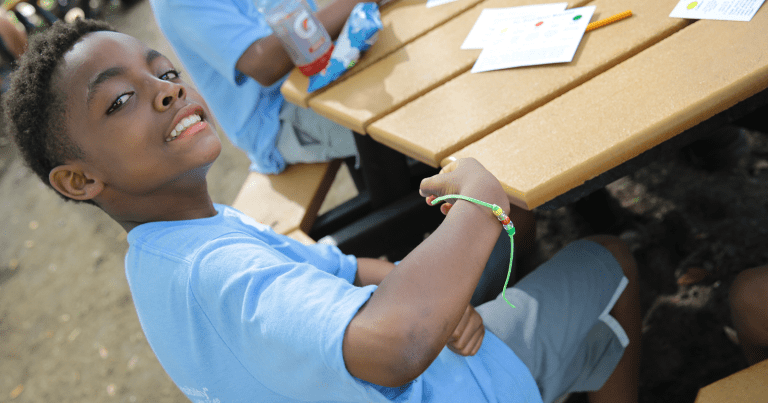
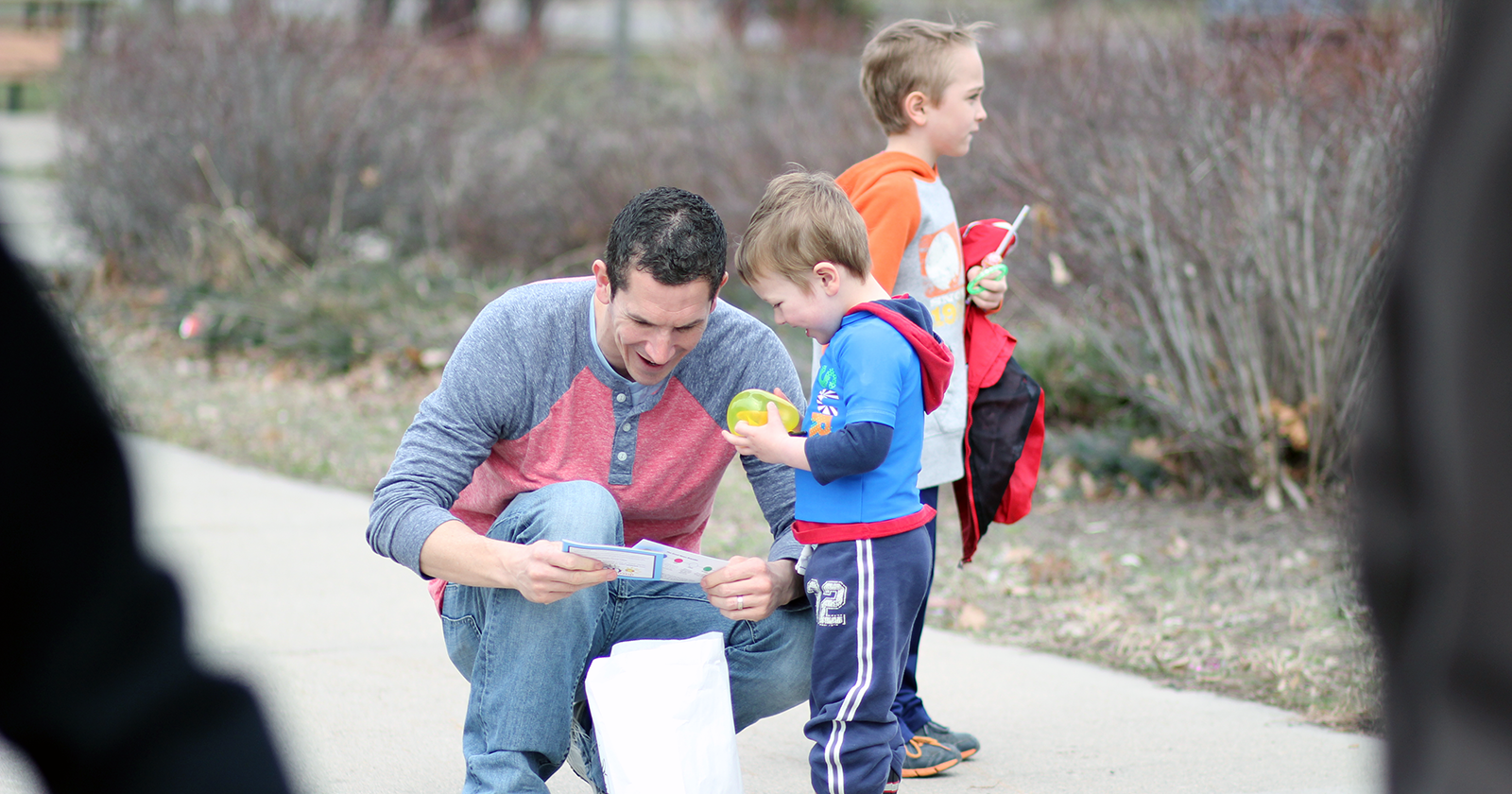
Easter Bags are simple white paper bags filled with candy, toys, crayons, gospel bead bracelets, and other biblical literature. The bags were provided to House of Mercy by the Inner City Ministry of Cru®, which partners with urban churches and ministries nationwide to share the gospel in marginalized communities.
Harvey had no idea that the Easter Bags were available, and was surprised to receive five of them, one for each of his children.
The gesture prompted a stream of tears down Harvey’s cheeks.
“What’s wrong?” asked Barbara Green, a volunteer from House of Mercy.
“I can finally go and see them,” Harvey said of his children.
“Why don’t you see them?” she said.
“I never have nothing for them, and I hate when they ask me for something, and I don’t have nothing to give them,” he responded.
Then, in a deep moment of vulnerability, he confessed to hiding from his kids when he spotted them in a store, his shame so deep.
“I said, you know, Harvey, we all have a past as well,” Barbara said. “We didn’t just wake up changed. We’ve been through some stuff, too. So, who are we to judge you? Jesus loves you just as you are. The more that you begin to realize that you are important and that Jesus does love you, things will change. You’ll change. You’ll want more.”
‘The more that you begin to realize that you are important and that Jesus does love you, things will change. You’ll change. You’ll want more.’
Harvey’s excitement over providing a gift to his kids has translated into visible progress as he began attending Sunday services.
“I’ve never been to a church like this before where I feel so welcome,” Harvey admitted to Barbara. “Y’all don’t judge me.”
Even so, there are moments when the lure of addiction reigns, and Harvey disappears for a few weeks, but soon he’s back, soaking in the love he’s found among former strangers, now friends.
Some Sundays, he sits in the back and falls asleep.
“We knew that he felt safe here enough to let his guard down and get some rest,” Barbara said.
Other times, he’s full of energy, especially on outreach days.
“He helps when we’re doing the giveaways, and we’re doing the Boxes of Love®,” Barbara said. (Another Compassionate Product™ of Inner City, the Boxes of Love provide all the fixings for a Thanksgiving meal for six people). “He goes out into the community and brings people back and says, ‘Hey, come to this church here.’”
‘He goes out into the community and brings people back and says, “Hey, come to this church here.”’
Barbara attributes House of Mercy’s heart for outreach to Inner City, which “encouraged us to the point where we started our own little food bank.
“We started bringing stuff to the church where we could either make them a sandwich and some chips or eat a TV dinner or something,” she said.
Harvey has been a beneficiary of the meals.
“That way, we make sure, at least for that minute, we know Harvey ate,” Barbara said.
Although setbacks remain, Barbara stays encouraged.
“I can see the growth in him, even through the addiction,” she said. “He feels like he’s part of the family.”
‘I can see the growth in him, even through the addiction. He feels like he’s part of the family.’
When Harvey brings residents into the church for the giveaways, Barbara said his entire countenance changes.
“I could just see the pride in him from when he first came through the door to now,” she said. “I can see where he feels important when he comes through that door.”
That environment of hope is nurtured through the resources and training provided to them through the Inner City Ministry of Cru.
“It (the resources and training) helps us with our evangelism and our outreach, and it kind of adds on to who we are as a church as a whole. We love outreach. We love giving to the community, and it allows us to reach more people with the help that you guys give.
“We’re a small church. I always say we’re a small church with a big anointing, because we make a really big impact in our community.”